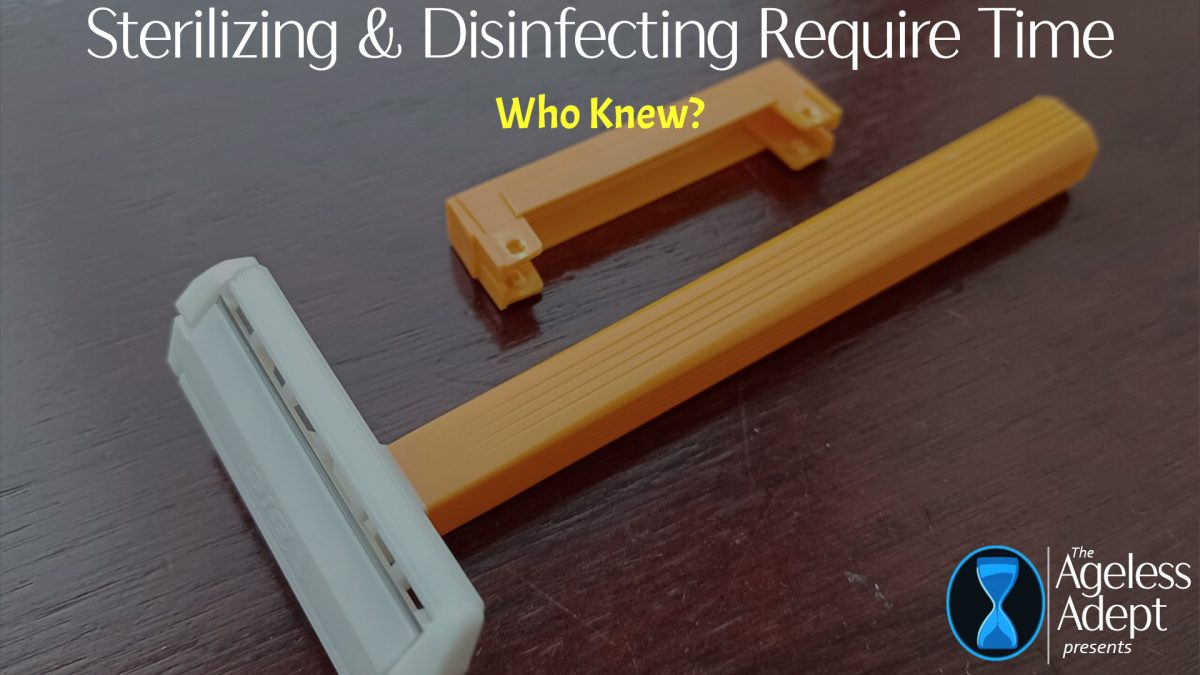
What’s the difference between sterilizing and disinfecting? I want to re-use my Bic™ disposable razors, but boiling the portion with the razor might warp the plastic encasing the blade. How do I prevent potentially contaminated blood, viruses, parasites, bacteria from being transmitted from one use to the next?
 Excellent question — especially when dealing with personal care items like razors that can carry traces of blood, skin cells, or pathogens. Here’s the key difference:
🧼 Sterilizing vs. Disinfecting
| Process | Definition | Effectiveness |
|---|---|---|
| Disinfection | Reduces or eliminates most pathogenic organisms (bacteria, fungi, some viruses). | Not all spores or very resistant microbes are killed. |
| Sterilization | Destroys all forms of microbial life, including spores, viruses, and parasites. | Complete decontamination — medical-grade. |
🔪 Reusing Disposable Razors Safely
Bic razors aren’t designed for long-term reuse, but if you’re intent on reusing them for health or sustainability reasons, here’s how to minimize health risks without melting the plastic:
✅ Practical Razor Disinfection Steps (Non-Warping)
1. Rinse Immediately After Use
-
Rinse thoroughly under hot water (ideally 60°C or higher) to remove all debris.
-
Tap gently to dislodge any trapped hair or cells.
2. Alcohol Soak (Best All-Around)
-
Soak the razor head (not handle) in 70–91% isopropyl alcohol for 5–10 minutes.
-
This disinfects most bacteria, viruses (including HIV, Hep B/C), and parasites.
-
Air-dry blade side down on a clean paper towel.
✅ Why not boiling? Boiling can warp the razor’s plastic or loosen the blades — not ideal for disposables.
3. Optional: Hydrogen Peroxide Soak
-
Use 3% hydrogen peroxide for 10–15 minutes for added viral and fungal protection.
-
Can be alternated with alcohol (e.g., one day alcohol, next day peroxide).
4. Dry Completely
-
Bacteria love moisture. Keep it dry and clean between uses.
-
Store in a dry, UV-lit or airflow-exposed place if possible (not a sealed wet bathroom drawer).
⚠️ Additional Safety Tips
-
Do not share razors with others.
-
Inspect blade for rust, nicks, or buildup — discard if damaged.
-
Limit reuse to 3–5 uses max, depending on skin sensitivity and blade integrity.
-
Consider rotating two razors, allowing each to dry for 24+ hours before reuse.
Why isn’t the killing of pathogens instantaneous upon contact with H2O2 or alcohol?
Great question — it’s intuitive to think that alcohol or hydrogen peroxide should kill pathogens the moment they touch them. But here’s why pathogen death isn’t instantaneous, even with powerful disinfectants:
🧬 Pathogen Structure + Defense Mechanisms
1. Cell Wall or Membrane Resistance
-
Bacteria and viruses often have protective outer layers (lipid envelopes, cell walls, protein coats) that resist penetration.
-
Alcohol and H₂O₂ must break down these barriers before reaching the vulnerable inner contents.
2. Time-Dependent Protein Denaturation
-
Disinfectants kill microbes by denaturing proteins or disrupting lipids, processes that:
-
Require chemical diffusion into the cell.
-
Happen progressively, not instantly.
-
3. Biofilms and Debris Shielding
-
Pathogens can hide behind biofilms (sticky microbial communities) or organic debris (blood, skin, etc.).
-
The disinfectant has to penetrate these layers before it can reach and kill the actual organism.
4. Spore Forming Organisms
-
Some bacteria (like Clostridium difficile) form spores that are incredibly resistant.
-
Alcohol and H₂O₂ have limited effectiveness against spores without extended exposure or special formulations.
🧪 Reaction Time of Common Disinfectants
| Agent | Mechanism | Time to Kill Most Germs |
|---|---|---|
| 70% Alcohol | Disrupts cell membranes, denatures proteins | ~10 seconds to 1 minute depending on microbe |
| 3% H₂O₂ | Oxidizes cell components, forms radicals | ~1 to 10 minutes depending on pathogen |
| Bleach (0.1%) | Oxidizes, denatures proteins | ~30 seconds to 1 minute |
| Soap + Water | Mechanical removal + cell wall disruption | 20–30 seconds of scrubbing |
⚠️ Key Insight:
Disinfectants need contact time to work effectively. That’s why most guidelines recommend:
-
Minimum 1 minute of soaking or surface contact,
-
And more time (5–10 minutes) for highly contaminated items or stubborn microbes.
If you want a faster-acting surface sterilizer, ozone, UV-C light, and vaporized hydrogen peroxide are some near-instant options used in hospitals — though not always practical for home razors!
A.I. Disclaimer
I encourage you to begin your own dialogue with AI to tailor recommendations to your specific needs. —The Ageless Adept
***
Save $$$ on Products I Use (Click Image to View All)
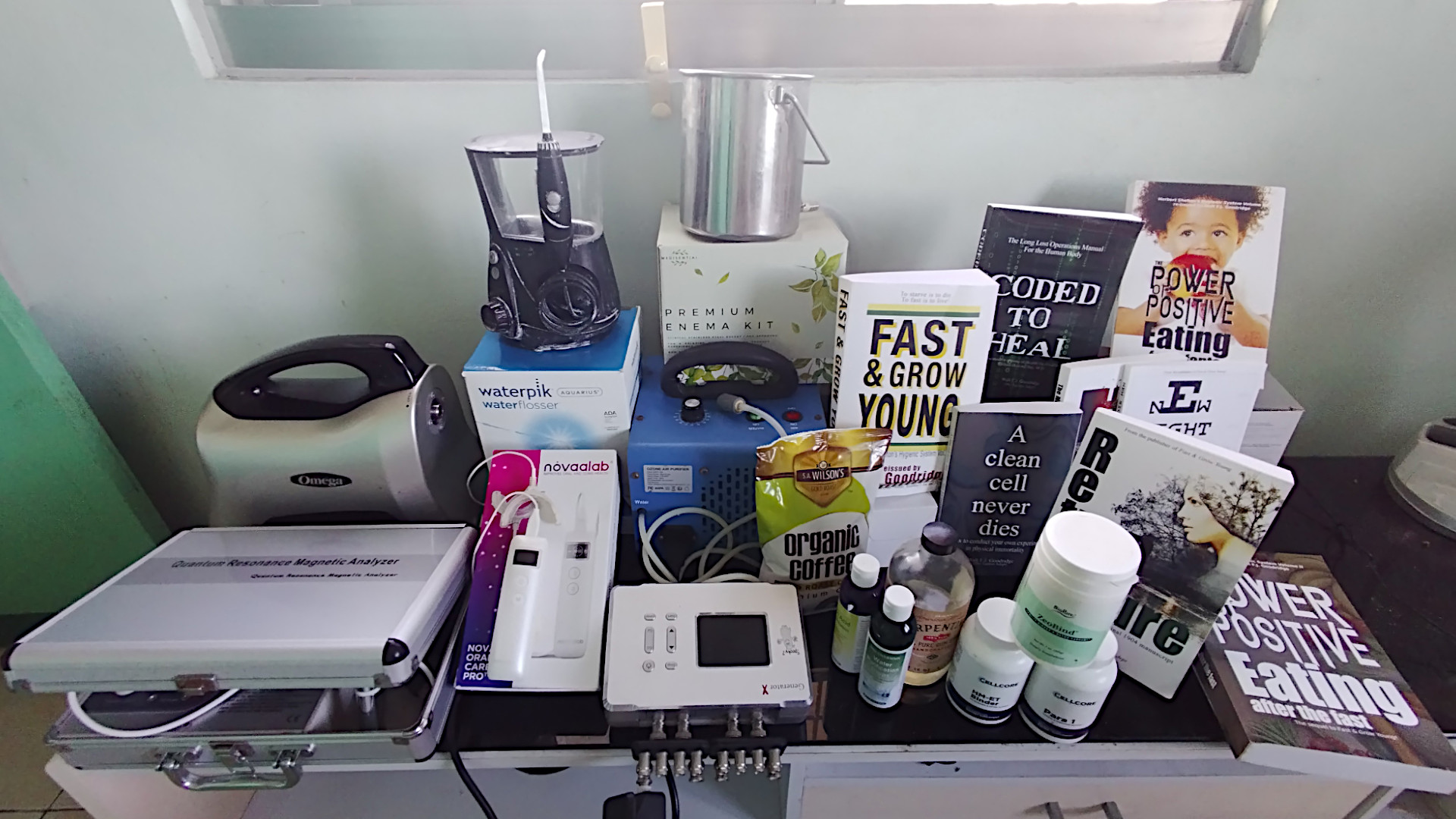
For discount coupon codes and direct links for some of unique health products I use, check out The Coupon Page —The Ageless Adept
***
-

Fast & Grow Young!
Price range: $6.49 through $16.95 Select options This product has multiple variants. The options may be chosen on the product page -
A Clean Cell Never Dies
Price range: $4.95 through $9.95 Select options This product has multiple variants. The options may be chosen on the product page -

The S.W.E.A.T Manifesto (FREE!)
Price range: $0.00 through $5.95 Select options This product has multiple variants. The options may be chosen on the product page


