
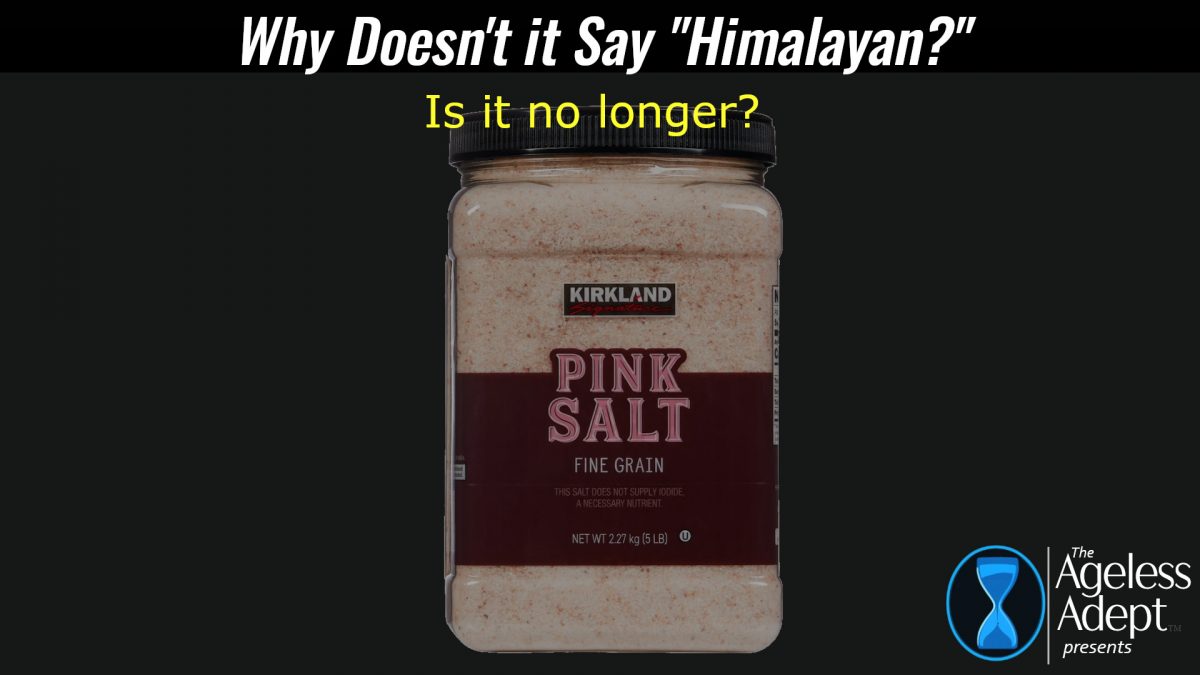
Kirkland™ “Himalayan Pink Salt” is now called “Pink Salt (product of Pakistan).” Was there some legal or logistical/factual reason for this change? Was there an actual change in the sourcing and contents of the product? Can we still infer the same compositional and vitamin/mineral content associated with Himalayan pink salt?
 Good questions. Here’s what I found — and what can reasonably be inferred — about why Kirkland (and perhaps other brands) have changed the labeling from “Himalayan Pink Salt” to simply “Pink Salt (Product of Pakistan).” And whether that means the salt is substantially different (or the same) in composition.
✅ What we do know about “Himalayan / Pink Salt from Pakistan”
- True “Khewra Salt Mine” in Pakistan (in the Salt Range, not high Himalayan peaks) is where almost all so-called “Himalayan pink salt” on the global market originates.
- This salt is a natural rock salt (halite) that contains mostly sodium chloride, with trace amounts of minerals — iron (giving the pink tint), plus small amounts of magnesium, calcium, potassium, etc.
- Independent sources emphasize that while pink salt has trace minerals, the amounts are very small — far too little to supply meaningful nutritional intake unless one consumes impractically large amounts of salt (which would exceed safe sodium limits).
- Health-expert reviews question many of the marketing/health claims for “Himalayan salt” as having substantial mineral & health benefits compared to regular salt — concluding that it is, from a health-nutrition perspective, largely equivalent to refined salt (aside from being unrefined, additive-free, and non-iodized).
So: “Himalayan pink salt” in the U.S. is most often salt from the Khewra mine in Pakistan — this has been the case for many years. The salt itself is chemically largely the same as other unrefined rock salts: mostly NaCl, bit of other trace minerals.
📦 Why the Label Changed for Kirkland / Others — and What It Likely Means
🔹 1. Legal / Regulatory Pressure / Correct Labeling Compliance
- There was a class-action lawsuit against Costco (seller of Kirkland) alleging that labeling “Himalayan Pink Salt” as if it came from “the heart of the Himalayan Mountains” (implying the high Himalayan range, e.g. India/Nepal) was misleading, because the salt actually comes from Pakistan.
- That suit was voluntarily dismissed, but likely triggered label-revisions to avoid future liability or consumer claims.
- As a result, the product is now labeled generically as “Pink Salt (Product of Pakistan).” This is more factually correct and avoids geographic marketing claims.
So the name change is not necessarily a change in the salt itself, but rather a marketing / legal adjustment for accuracy and to avoid “Himalayan” claims that imply an origin many buyers associate with the Himalayan high-mountains (Nepal/India).
🔹 2. Transparency and Source Clarification (Consumer Pressure)
- Recent industry and governmental pushes (especially from Pakistani exporters) aim to certify and protect the origin of the salt — “Khewra / Pakistan” — and label it clearly to avoid misleading consumers.
- This helps prevent “pink salt” from other sources or imitations (dyed salt, low-quality rock salt from different mines, etc.) being mis-represented as “Himalayan.”
Thus, “Pink Salt (Product of Pakistan)” is likely the authentic salt from Khewra — just with more accurate labeling than old marketing copy.
⚠️ What the Label Change Does — and Doesn’t — Say About Composition
✅ What we can still infer (likely true):
- The salt is still natural rock salt from Pakistan’s Khewra mine (or equivalent).
- The mineral/trace-element composition is likely the same as before (sodium chloride + trace minerals such as iron, magnesium, calcium, potassium, and other minor components).
- The pink coloring — from iron oxide / trace minerals — remains, provided it is authentic salt.
- It remains unrefined and additive-free (no anticaking agents / iodine, unless otherwise labeled).
⚠️ What we cannot assume simply because it says “Pink Salt”:
- That it contains meaningful quantities of trace minerals that matter nutritionally (most independent analyses show mineral content too low to fulfill significant dietary needs).
- That it is substantially “healthier” than regular salt — at normal dietary usage, health experts claim benefits are overstated.
- That “all pink salts” are Himalayan — outside Pakistan there are salts sold as “pink salt” that may come from other, non-Himalayan, mines or even be dyed. The genuine article is strictly from Khewra (or similar Pakistan mines).
🎯 My Assessment: Should You Treat the Salt as Equivalent to “Himalayan Pink Salt”?
Yes — if the labeling says “Product of Pakistan,” you can reasonably treat it as genuine Himalayan/Pakistani pink salt, with the same compositional profile as before.
No — you should not count on it for meaningful trace-mineral nutrition.
It remains mostly sodium chloride, with trace minerals in amounts too small to make a nutritional difference. Relying on it for magnesium, potassium, iron, etc. would be a mistake.
In short: think of it as a culinary or electrolyte salt — not a mineral supplement.
🧂 What to Do If You Care About Trace Minerals
If your goal is to get real mineral and trace-element intake (rather than just sodium), use other sources:
- Mineral-rich greens, seaweed, root vegetables
- Mineral supplements (magnesium, potassium, trace element blends)
- Electrolyte concentrate (like your 40,000 Volts) — that’s far more effective
Use the “pink salt” as flavoring / sodium regulation / electrolytes only.
A.I. Disclaimer
I encourage you to begin your own dialogue with AI to tailor recommendations to your specific needs. —The Ageless Adept
***
Save $$$ on Products I Use (Click Image to View All)
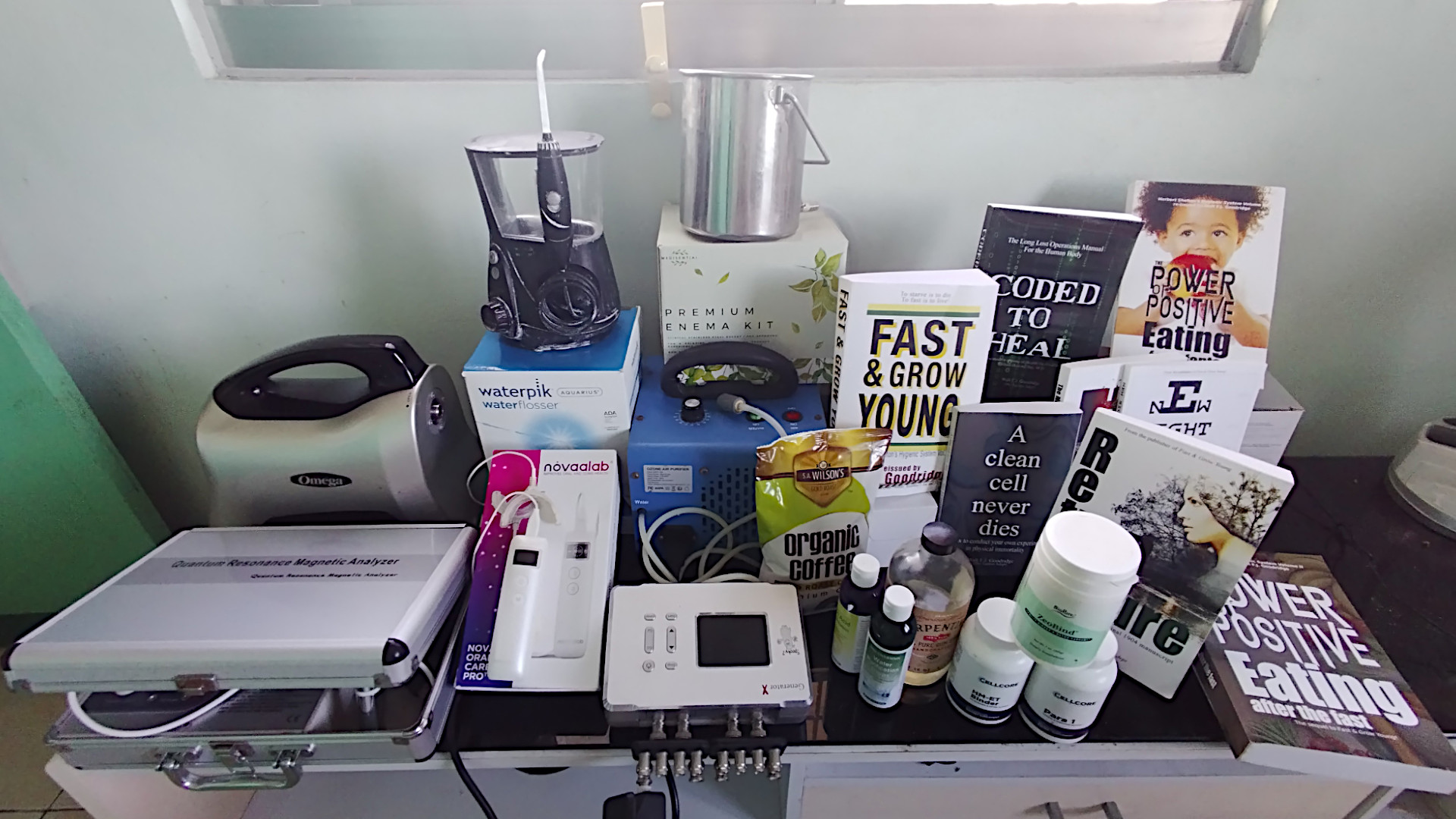
For discount coupon codes and direct links for some of unique health products I use, check out The Coupon Page —The Ageless Adept
***
-

(FREE!) The Ageless Adept’s Master Shopping List, Substitution Checklist & Immunity Top 10
$0.00 Add to cart -

Return to Nature: The Modern Re-issue of the Original 1904 Manuscript
Price range: $5.95 through $15.95 Select options This product has multiple variants. The options may be chosen on the product page -

The Fast & Grow Young Series
Price range: $12.00 through $56.00 Select options This product has multiple variants. The options may be chosen on the product page


