
Header [wpcode id="144"] Body [wpcode id="144"]
The Ageless Adept…

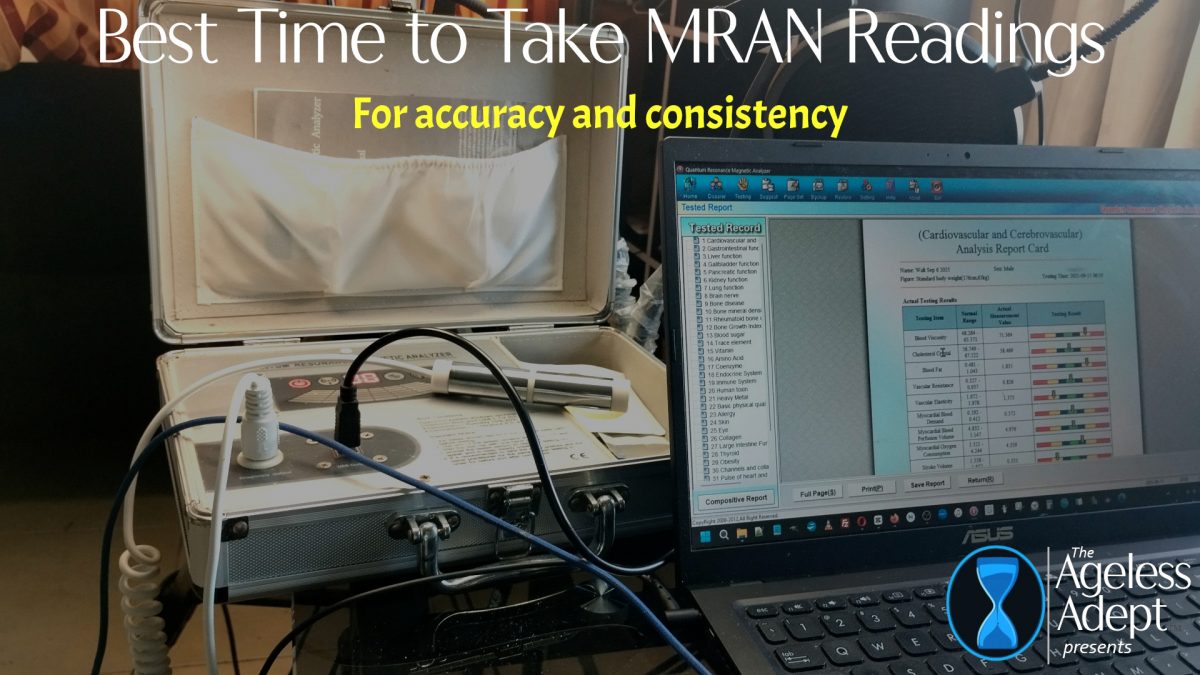
Best Time to Take Magnetic Resonance Analyzer Readings

Consistent timing and preparation improve the reliability of daily MRAN readings and long term health tracking.

Quick Answer: The best time to take Magnetic Resonance Analyzer readings is in the morning before eating and after waking, when variables like food, stress, and activity are minimized for more consistent results.

To get the most accurate, reliable and medically-supportable state of my bodily health, what would be the best time to take my Magnetic Resonance Analysis Device readings every day?

To obtain the most accurate, consistent, and medically interpretable Magnetic Resonance Analysis Device readings, it’s ideal to follow a standardized protocol that minimizes variables such as hydration, digestion, detox activity, and circadian fluctuations. Based on principles from clinical diagnostics, bioresonance protocols, and MRAN device manufacturers, the best time for daily MRAN readings is typically:

Optimal Time:

Morning, 1–2 hours after waking, before eating, and after urination, ideally between 7:00–9:00 AM.


Why This Window?

  1. Fasted State: Readings are less influenced by recent food, drink, or supplements (which can cause transient spikes in biomarkers).

  2. Stable Hydration: After first urination and a glass of water, your hydration is more balanced.

  3. Minimal Circadian Disruption: Hormonal levels and detox organ function (especially adrenal and liver) begin to stabilize after sleep.

  4. Before Daily Inputs: You haven’t introduced variables like herbs, MMS, or strong detoxifiers which can distort real baseline states.


Additional Guidelines:

  • Avoid the following for at least 12 hours before scanning:

    • Alcohol or coffee (not an issue for you).

    • High-dose supplements or detox agents like MMS, zeolite, glutathione, etc.

  • Do not scan immediately after:

    • Sauna, bath, enema, intense exercise, or stressful emotional experiences.

  • Sit quietly for 5–10 minutes before scanning to allow your nervous system to settle.

  • Repeat at the same time each day for reliable trend tracking.

Frequently Asked Questions

Why is morning the best time for readings?

The body is in a fasted and stable state, reducing fluctuations caused by food, activity, or supplements.

Should I avoid supplements before testing?

Yes, avoiding recent supplements helps prevent temporary shifts that could distort baseline readings.

How can I improve consistency?

Test at the same time daily under similar conditions to track reliable trends over time.


A.I. Disclaimer

Please note that the AI-generated responses to my health-related questions are often slightly customized based on a special prompt that includes my stated preferences for natural remedies, vegan-friendly products and protocols, alternative therapies, Traditional Chinese Medicine, and my personal medical history.

I encourage you to begin your own dialogue with AI to tailor recommendations to your specific needs. —The Ageless Adept

***


Save $$$ on Products I Use (Click Image to View All)
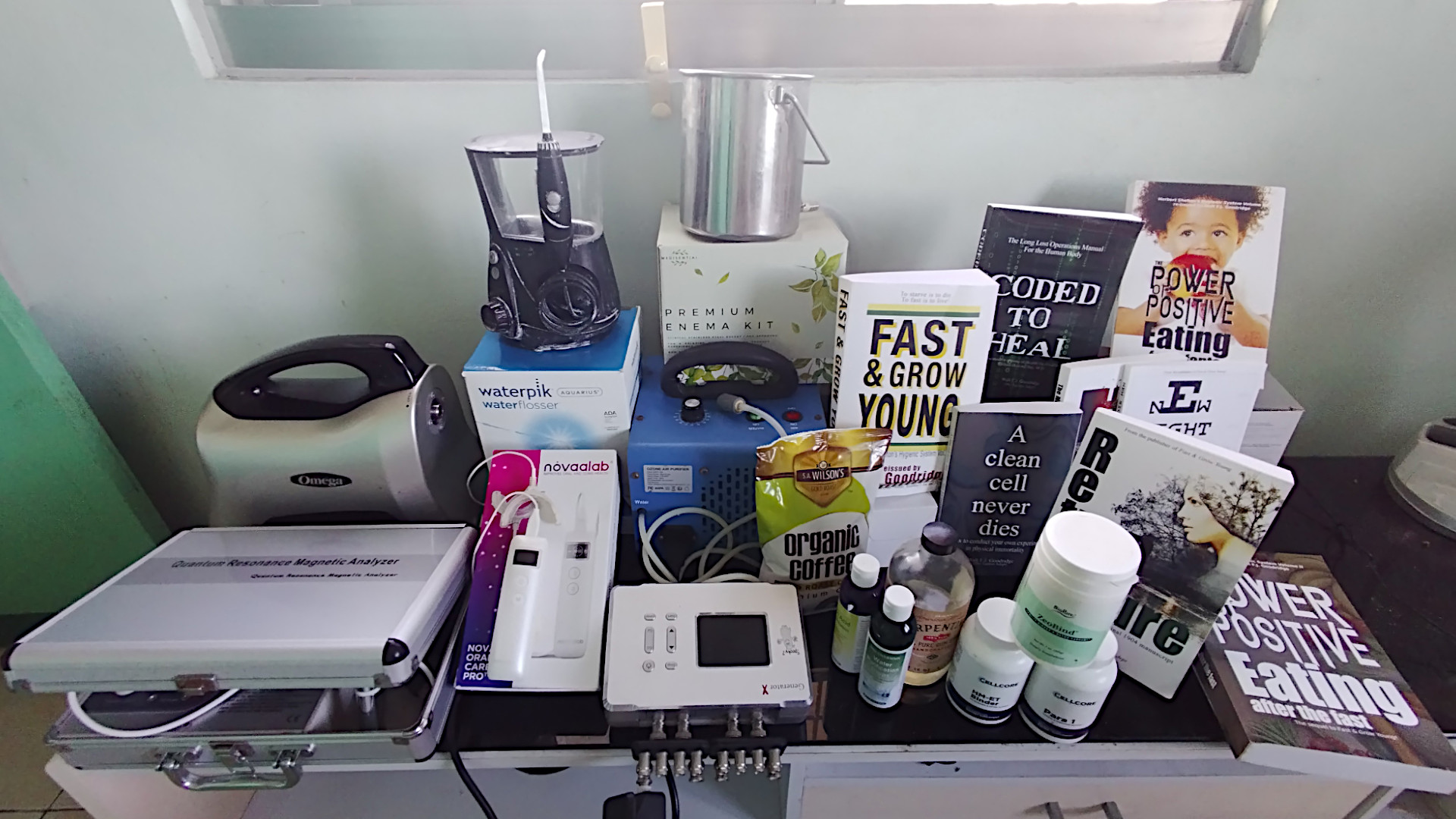

For discount coupon codes and direct links for some of unique health products I use, check out The Coupon PageThe Ageless Adept

***

Godzilla’s PH Level? Acidic or Alkaline?

Device readings depend heavily on input data and algorithms. Understanding this prevents misinterpretation of results.

Quick Answer: Magnetic Resonance devices estimate pH indirectly using electrical signals and user inputs like height, which can distort results if entered incorrectly. The readings reflect algorithmic interpretation, not direct chemical measurement.

The blog post title inspired by ChatGPT’s sense of humor (see response):

I started a new profile in my Magnetic Resonance Analysis Device. New profiles require the input of a subject’s age, weight and height because–as one would expect–“normal” for a given individual varies by these parameters. However, when I entered my height, instead of 176cm, I mistakenly entered 1760cm, and ran the test. As one would expect, the readings were wildly different from the previous day’s. What was curious, however, was that my pH readings jumped from a range of an acidic “7.01 to 7.25” to now a very alkaline 7.55! (“normal,” according to the device, is between 7.350 to 7.450). In other words, one’s height affects the pH level result. Evidently, the device reads some static quality/quantity in the body, and that same quantity would indicate that a short person is acidic while that same reading would indicate that a tall person is alkaline. Based on this, what quality can we deduce the device is detecting? Additionally, why does height alter its interpretation?

From what you’ve described, the Magnetic Resonance Analysis Device isn’t truly “measuring” pH directly in the same way a blood or saliva test strip would — instead, it’s inferring it from other signals, then normalizing those readings against a baseline model that depends on the demographic data you enter (age, weight, height).

Here’s what’s going on in principle:


1️⃣ What the device is probably detecting

Most bioresonance-type analyzers don’t directly measure chemical pH. Instead, they sense electrical properties of tissues — such as:

  • Electrical impedance / resistance

  • Capacitance

  • Phase angle

  • Electromagnetic response at certain frequencies

These properties can be influenced by electrolyte concentration, hydration status, and cell membrane charge — all of which correlate loosely (but not perfectly) with acid-base balance in the body.


2️⃣ Why height changes the interpretation

When you enter height, the device uses it in its calibration formula to “normalize” raw readings into what it thinks is your physiological range.

For example:

  • A taller person has more tissue volume and water content on average.

  • The same raw impedance value in a short vs. tall person will be interpreted differently by the algorithm.

  • If you tell the device you’re 1760 cm tall (17.6 meters — like Godzilla’s cousin), it assumes you have massively more tissue fluid volume than reality.

  • The raw signal it detects is then scaled relative to this unrealistic “ideal” — so what might be slightly acidic on your real body could appear extremely alkaline on the “giant” profile because the math stretches the baseline.


3️⃣ What we can deduce

  • The pH number you see is not a direct biochemical measurement — it’s a computed value derived from electrical characteristics, which the device adjusts using your demographic inputs.

  • Entering an extreme height shifts the “normal” window so far that your same raw bioelectrical signal gets classified very differently.

  • The underlying “quality” being detected is likely tissue electrical conductivity/resistance (related to ion concentration and fluid distribution), not pH per se.


And for the record, in case you’re wondering:

Based on what we know about dinosaurs, reptiles, etc., would Godzilla’s pH level be more acidic or alkaline?

If we imagine Godzilla as a biologically plausible creature (which is already a bit of a stretch 😄), we can reason it out from what we know about reptiles, dinosaurs, and large ectotherms/endotherms.


1️⃣ Dinosaurs & Large Reptiles

  • Modern reptiles (e.g., crocodiles, Komodo dragons) generally have blood pH around 7.3–7.4, very similar to mammals.

  • Dinosaurs were probably mesothermic (somewhere between cold-blooded and warm-blooded), so they likely maintained pH in a narrow alkaline range like mammals — because enzyme activity is extremely pH-sensitive.


2️⃣ The Size Factor

  • Size itself doesn’t inherently change “ideal” pH — blue whales (30 meters long) still have ~7.4 pH.

  • What changes with size is buffer capacity — a huge animal has more blood volume and bicarbonate reserves, so pH shifts happen more slowly.


3️⃣ Godzilla’s Physiology

If Godzilla were:

  • Marine-based → his electrolyte profile might be closer to sea reptiles like marine iguanas or sea turtles, still ~7.3–7.4 but maybe slightly more alkaline after prolonged activity due to CO₂ off-gassing.

  • Atomic-breath-equipped → The metabolic stress of generating nuclear plasma would dump acids into the bloodstream, causing temporary acidosis — so he’d need exceptional buffering to keep pH from dropping.


Most likely answer: Godzilla’s “resting” pH would still hover in the mildly alkaline human/reptile range (~7.4).
⚠️ After battle: Intense exertion and destruction would cause metabolic acidosis, potentially dropping pH toward 7.2 — but he’d recover quickly thanks to massive bicarbonate reserves in his blood and tissues.

Frequently Asked Questions

Does height affect pH readings?

Yes, incorrect height alters the device’s calibration, changing how it interprets the same signal.

What does the device actually measure?

It detects electrical properties like impedance that correlate loosely with body chemistry.

Is the pH value accurate?

No, it is an estimated value derived from algorithms rather than a direct biological measurement.


A.I. Disclaimer

Please note that the AI-generated responses to my health-related questions are often slightly customized based on a special prompt that includes my stated preferences for natural remedies, vegan-friendly products and protocols, alternative therapies, Traditional Chinese Medicine, and my personal medical history.

I encourage you to begin your own dialogue with AI to tailor recommendations to your specific needs. —The Ageless Adept

***


Save $$$ on Products I Use (Click Image to View All)


For discount coupon codes and direct links for some of unique health products I use, check out The Coupon PageThe Ageless Adept

***

An Amazing Self-Diagnosis Tool!

Explore how this device evaluates multiple health markers and whether it fits into your wellness routine.

Quick Answer: A Magnetic Resonance Analyzer is a non-invasive device that claims to assess vitamins, minerals, organ function, and toxins quickly. It provides broad wellness insights but should be used alongside conventional testing for accuracy.

Are your vitamin levels too low? Do you have heavy metals in your system? Is your liver functioning properly? Is there enough collagen in your system? Wait, what? You don’t know???? Well, check out this easy-to-use tool I purchased online while I was in the Philippines. It’s called a Magnetic Resonance Analysis Device by a company called Quantum.  I’ll work on negotiating a discount with a supplier so US customers can have a good option. Meanwhile, you can take your chances on ebay here: Magnetic Resonance Analysis Device

This is the one I purchased. So, if you are or know someone in the Philippines, this might be an option, https://www.lazada.com.ph/products/quantum-resonance-magnetic-analyzer-full-body-sub-health-analyzer-equipment-i117898264.html

Here’s a short teaser explaining how it works. I’ll do a more complete video in a short while, so please subscribe to the channel if you’re interested. Meanwhile, feel free to ask any questions about the analyzer in the video comments section so we can start an extended conversation!

Here are the categories it monitors (“normal” readings vary by individual):

1 Cardio-Blood Viscosity (normal: 48.264 to 65.371)
1 Cardio-Cholesterol Crystal (normal: 56.749 to 67.522)
1 Cardio-Blood Fat (normal: 0.481 to 1.043)
1 Cardio-Vascular Resistance (normal: 0.327 to 0.937)
1 Cardio-Vascular Elasticity (normal: 1.672 to 1.978)
1 Cardio-Myocardial Blood Demand (normal: 0.192 to 0.412)
1 Cardio-Myocardial Perfusion Volume (normal: 4.832 to 5.147)
1 Cardio-Myocardial Oxygen Consumption (normal: 3.321 to 4.244)
1 Cardio-Stroke Volume (normal: 1.338 to 1.672)
1 Cardio-Left Ventricular Ejection Impedance (normal: 0.669 to 1.544)
1 Cardio-Left Ventricular Effective Pump Power (normal: 1.554 to 1.988)
1 Cardio-Coronary Artery Elasticity (normal: 1.553 to 2.187)
1 Cardio-Coronary Perfusion Pressure (normal: 11.7 to 18.4)
1 Cardio-Cerebral Blood Vessel Elasticity (normal: 0.708 to 1.942)
1 Cardio-Brain Tissue Blood (normal: 6.138 to 21.396)
2 Gastro-Pepsin Secretion (normal: 59.847 to 65.234)
2 Gastro-Gastric Peristalsis (normal: 58.425 to 61.213)
2 Gastro-Gastric Absorption (normal: 34.367 to 35.642)
2 Gastro-Small Intest. Peristalsis (normal: 133.437 to 140.476)
2 Gastro-Small Intestine Absorption (normal: 3.572 to 6.483)
3 Liver-Protein Metabolism (normal: 116.34 to 220.621)
3 Liver Energy Production Function (normal: 0.713 to 0.992)
3 Liver-Detoxification Function (normal: 0.202 to 0.991)
3 Liver-Bile Secretion Function (normal: 0.432 to 0.826)
3 Liver-Liver Fat Content (normal: 0.097 to 0.419)
4-Gallbladder-Serum Globulin (A/G) (normal: 126-159)
4 Gallbladder-Total Bilirubin (TBIL) (normal: 0.232 to 0.686)
4 Gallbladder-Alkaline Phosphatase (ALP) (normal: 0.082 to 0.342)
4 Gallbladder Serum Total Bile Acid(TBA) (normal: 0.317 to 0.695)
4 Gallbladder-Bilirubin (DBIL) (normal: 0.218 to 0.549)
5 Pancreas-Insulin (normal: 2.845 to 4.017)
5 Pancreas-Polypeptide (normal: 3.21 to 6.85)
5 Pancreas-Glucagon ( 2.412 to 2.974)
6 Kidney-Urobilinogen (normal: 2.762 to 5.424)
6 Kidney-Uric Acid Index (normal: 1.435 to 1.987)
6 Kidney-Blood Urea (BUN) (normal: 4.725 to 8.631)
6 Kidney-Proteinuria (normal: 1.571 to 4.079)
7 Lung-Vital Capacity (normal: 3348 to 3529)
7 Lung-Total Lung Capacity (normal:4301 to 4782)
7 Lung-Airway Resistance (RAM) (normal: 1.374 to 1.709)
7 Lung-Arterial Oxygen PaCO2 (normal: 17.903 to 21.012 )
8 Brain-Status of Tissue Blood Supply (normal: 143.37 to 210.81)
8 Brain-Cerebral Arteriosclerosis (normal: 0.103 to 0.642)
8 Brain-Func Status Cranial Nerve (normal: 0.253 to 0.659)
8 Brain-Sentiment Index (normal: 0.109 to 0.351)
8 Brain-Memory Index (normal: 0.442 to 0.817)
10 Bone Mineral-Osteoclast coeff (normal: 86.73 to 180.97)
10 Bone Mineral-Amount of Calcium Loss (normal: 0.209 to 0.751)
10 Bone Mineral-Degree of Hyperpl (normal: 0.046 to 0.167)
10 Bone Mineral-Degree of Osteoporosis (normal: 0.124 to 0.453)
10 Bone Mineral Density (normal: 0.433 to 0.796 )
11 Rheumatoid-Cervical Calcification (normal: 421 to 490)
11 Rheumatoid-Degree of Lumbar Calcific (normal:4.326 to 7.531)
11 Rheumatoid- Bone Hyperplasia (normal: 2.954 to 5.543)
11 Rheumatoid-Osteoporosis Coeff (normal: 2.019 to 4.721)
11 Rheumatoid- Rheumatism coeff (normal: 4.023 to 11.627)
12 Bone Growth-Alkaline Phospatase (normal: 0.433 to 0.796)
12 Bone Growth-Osteocalcin (normal: 0.525 to 0.817)
12 Bone Growth-Status of Long Bone healing (normal: 0.713 to 0.992)
12 Bone Growth-Short bone cartilage (normal: 0.202 to 0.991)
12 Bone Growth-Epiphyseal line (normal: 0.432 to 0.826)
13 Blood Sugar-Coefficient of Insulin Secretion (normal: 2.967 to 3.528)
13 Blood Sugar-Blood Sugar coeff (normal: 2.163 to 7.321)
13 Blood Sugar-Urine Sugar coeff (normal: 2.204 to 2.819)
14 Trace-Calcium (normal: 1.219 to 3.021)
14 Trace-Iron (normal: 1.151 to 1.847)
14 Trace-Zinc (normal: 1.143 to 1.989)
14 Trace-Selenium (normal: 0.848 to 2.045)
14 Trace-Phosphorous (normal: 1.195 to 2.134)
14 Trace-Potassium (normal: 0.689 to 0.987)
14 Trace-Magnesium (normal: 0.568 to 0.992)
14 Trace-Copper (normal: 0.474 to 0.749)
14 Trace-Cobalt (normal: 2.326 to 5.531)
14 Trace-Manganese (low 0.497 to 0.879)
14 Trace-Iodine (normal: 1.421 to 5.490)
14 Trace-Nickel (normal: 2.462 to 5.753)
14 Trace-Fluorine (normal: 1.954 to 4.543)
14 Trace-Molybdenum (normal: 0.938 to 1.712)
14 Trace-Vanadium (normal: 1.019 to 3.721)
14 Trace-Tin (normal; 1.023 to 7.627)
14 Trace-Silicon (normal: 1.425 to 5.872)
14 Trace-Strontium (normal: 1.142 to 5.862)
14 Trace-Boron (normal: 1.124 to 3.453)
15 Vitamin-A (normal: 0.346 to 0.401)
15 Vitamin-B1 (Thiamine) (normal: 2.124 to 4.192)
15 Vitamin-B2 (Riboflavin) (normal: 1.549 to 2.213)
15 Vitamin-B3 (Niacin) (normal: 14.477 to 21.348)
15 Vitamin-B6 (Pyroxidine) (normal: 0.824 to 1.942)
15 Vitamin-B12 (normal: 6.428 to 21.396)
15 Vitamin-C (normal: 4.543 to 5.023)
15 Vitamin-D3 (normal: 5.327 to 7.109)
15 Vitamin-E (normal: 4.826 to 6.013)
15 Vitamin-K (normal: 0.717 to 1.486)
16 Amino Acid-Lysine (normal: 0.253 to 0.659)
16 Amino Acid-Tryptophan (normal: 2.374 to 3.709)
16 Amino Acid-Phenylalanine (normal: 0.731 to 1.307)
16 Amino Acid-Methionine (normal: 0.432 to 0.826)
16 Amino Acid-Threonine (normal: 0.422 to 0.817)
16 Amino Acid-Isoleucine (normal: 1.831 to 3.248)
16 Amino Acid-Leucine (normal: 2.073 to 4.579)
16 Amino Acid-Valine (normal: 2.012 to 4.892)
16 Amino Acid-Histidine (normal: 2.903 to 4.012; gpt:1.73 to 2.96)
16 Amino Acid-Arginine (normal: 0.710 to 1.209)
17 Coenzyme-Nicotinamide (normal: 2.074 to 3.309)
17 Coenzyme-Biotin B7 (normal: 1.833 to 2.979)
17 Coenzyme-Pantothenic Acid (B5) (normal: 1.116 to 2.101)
17 Coenzyme-Folic Acid(B9) (normal: 1.449 to 2.246)
17 Coenzyme-Q10 (normal: 0.831 to 1.588)
17 Coenzyme-Glutathione (normal: 0.726 to 1.281)
18 Endocrine-Thyroid Secretion (normal: 2.954 to 5.543)
18 Endocrine-Parathyroid hormone (normal: 2.845 to 4.017)
18 Endocrine-Adrenal Glands Index (normal: 2.412 to 2.974)
18 Endocrine-Pituitary secretion (normal: 2.163 to 7.34)
18 Endocrine-Pineal secretion (normal: 3.210 to 6.854)
18 Endocrine-Thymus gland (normal: 2.967 to 3.528)
18 Endocrine- Gland Secretion Index (normal: 2.204 to 2.819)
19 Immune-Lymph (normal: 133.437 to 140.47)
19 Immune-Tonsil Immune Index (normal: 0.124 to 0.453)
19 Immune-Bone marrow Index (normal: 0.146 to 3.218)
19 Immune-Spleen (normal: 34.367 to 35.642)
19 Immune-Thymus index (normal: 58.425 to 61.213)
19 Immune-Immunoglobulin index (normal: 3.712 to 6.981)
19 Immune-Respiratory index (normal: 3.241 to 9.814)
19 Immune-Gastro Immune Index (normal: 0.638 to 1.712)
19 Immune-Mucosa (normal: 4.111 to 18.741)
20 Human Toxin-Stimulating Beverage (normal: 0.209 to 0.751)
20 Human Toxin-Electromagnetic (normal: 0.046 to 0.167)
20 Human Toxin-Tobacco (normal: 0.124 to 0.453)
20 Human Toxin-Pesticide (normal: 0.013 to 0.313)
21 Heavy Metal-Lead (normal: 0.052 to 0.643)
21 Heavy Metal-Mercury (normal: 0.013 to 0.336)
21 Heavy Metal-Cadmium (normal: 0.527 to 1.523)
21 Heavy Metal-Chromium (normal: 0.176 to 1.183)
21 Heavy Metal-Arsenic (normal: 0.153 to 0.621)
21 Heavy Metal-Antimony (normal: 0.162 to 0.412)
21 Heavy Metal-Thallium (normal: 0.182 to 0.542)
22 Basic Physical-Response Ability (normal: 59.786 to 65.424)
22 Basic Physical-Mental Power (normal: 58.715 to 63.213)
22 Basic Physical-Water Shortage (normal: 33.967 to 37.642)
22 Basic Physical-Hypoxia (normal: 133.642 to 141.476)
22 Basic Physical-PH (acidic; 7.35 to 7.45)
23 Allergy-Drug allergy index (normal: 0.431 to 1.329)
23 Allergy-Alcohol allergy index (normal: 0.432 to 1.246)
23 Allergy-Pollen allergy index (normal: 0.143 to 1.989)
23 Allergy-Injection allergy index (normal: 0.847 to 1.045)
23 Allergy-Chemical products allergy index (normal: 0.842 to 1.643)
23 Allergy-Paint allergy index (normal: 0.346 to 1.401)
23 Allergy-Dust allergy index (normal: 0.543 to 1.023)
23 Allergy-Smoke allergy index (normal: 0.826 to 1.013)
23 Allergy-Hair dye allergy (normal: 0.717 to 1.486)
23 Allergy-Animal fur allergy index (normal: 0.124 to 1.192)
23 Allergy-Metal jewelry allergy index (normal: 0.549 to 1.213)
23 Allergy-Seafood allergy index (normal: 0.449 to 1.246)
23 Allergy-Milk allergy index (normal: 0.477 to 1.348)
24 Skin-Free Radical (normal: 0.124 to 3.453)
24 Skin-Collagen Index (normal: 4.471 to 6.079)
24 Skin-Skin Grease Index (normal: 14.477 to 21.348)
24 Skin-Skin Immunity Index (normal: 1.035 to 3.230)
24 Skin-Moisture Index (normal: 0.218 to 0.953)
24 Skin-Moisture loss (normal: 2.214 to 4.158)
24 Skin-Red Blood Trace Index (normal: 0.824 to 1.942)
24 Skin-Skin Elasticity Index (normal: 2.717 to 3.512)
24 Skin-Melanin Index (normal: 0.346 to 0.501)
24 Skin-Horniness (normal: 0.842 to 1.858)
25 Eye-Bags under the eyes* (normal: 0.510 to 3.109)
25 Eye-Collagen eye wrinkle (normal: 2.031 to 3.107)
25 Eye-Dark circles (normal: 0.831 to 3.188)
25 Eye-Lymphatic Obstruction* (normal: 1.116 to 4.101)
25 Eye-Sagging (normal: 0.233 to 0.559)
25 Eye-Edema* (normal: 0.332 to 0.726)
25 Eye-Eye cell activity (normal: 0.118 to 0.892)
25 Eye-Visual Fatigue (normal: 2.017 to 5.157)
26 Collagen-Eye (normal: 6.352 to 8.325)
26 Collagen-Tooth (normal: 7.245 to 8.562)
26 Collagen-Hair and skin (normal: 4.533 to 6.179)
26 Collagen-Endocrine system (normal: 6.178 to 8.651)
26 Collagen-Circulatory system (normal: 3.586 to 4.337)
26 Collagen-Digestive system (normal: 3.492 to 4.723)
26 Collagen-Immune system (normal: 3.376 to 4.582)
26 Collagen-Motion systems (normal: 6.458 to 8.133)
26 Collagen-Muscle Tissue (normal: 6.552 to 8.268)
26 Collagen-Fat Metabolism (normal: 6.338 to 8.368)
26 Collagen-Detoxification & metabolism (normal: 6.187 to 8.466)
25 Coillagen-Reproductive system (normal: 3.778 to 4.985)
25 Collagen-Nervous system (normal: 3.357 to 4.239)
25 Collagen-Skeleton (normal: 6.256 to 8.682)
27 Large Intestine-Peristalsis (normal: 4.572 to 6.483)
27 Large Intestine-Colonic absorption (normal: 2.946 to 3.815)
27 Large Intestine-Intest. bacteria (normal: 1.734 to 2.621)
27 Large Intestine-Intraluminal pressure (normal: 1.173 to 2.297)
28 Thyroid-Free Thyroxine (FT4) (normal: 0.100 to 0.310)
28 Thyroid-Thyroglobulin (normal: 0.114 to 0.202)
28 Thyroid-Anti-Thyroglobulin antibodies (normal: 0.734 to 0.421)
28 Thyroid-Three (T3) (normal: 0.160 to 0.300)
29 Obesity-Abnormal lipid metabolism (normal: 1.992 to 3.713)
29 Obesity-Brown Adipose (normal: 2.791 to 4.202)
29 Obesity-Hyperinsulinemia coefficient (normal: 0.097 to 0.215)
29 Obesity-Nucleus of the Hypothalamus (normal: 0.332 to 0.626)
29 Obesity-Triglyceride content (normal: 1.341 to 1.991)
30 Channels-Hand Tai Yin Lung (normal: 48.264 to 65.371)
30 Channels-Hand Yangming Large Intestine (normal: 56.749 to 67.522)
30 Channels-Foot Yangming Stomach (normal: 0.481 to 1.043)
30 Channels-Foot Tai Yin Spleen (normal: 0.327 to 0.937)
30 Channels-Hand Shao Yin Heart Sutra (normal: 1.672 to 1.978)
30 Channels-Hand small intestine sun (normal: 0.192 to 0.412)
30 Channels-Bladder full sun (normal: 4.832 to 5.147)
30 Channels-Foot Shao Yin Kidney (normal: 3.321 to 4.244)
30 Channels-Pericardium by (normal: 1.338 to 1.672)
30 Channels-Hand-Shaoyang (normal: 0.669 to 1.544)
30 Channels-Foot Gallbladder (normal: 1.554 to 1.988)
30 Channels-Foot Jue In Liver (normal: 1.553 to 2.187)
30 Channels-Jen mai (normal: 11.719 to 18.418)
30 Channels-Governor meridian (normal: 0.708 to 1.942)
30 Channels-Vital meridian (normal: 6.138 to 21.396)
30 Channels-Tai mai (normal: 5.733 to 7.109)
31 Pulse Heart & Brain-Stroke Index (normal: 60.735 to 65.396)
31 Pulse Heart & Brain-Stroke volume (SV) (normal: 63.012 to 67.892)
31 Pulse Heart & Brain-Heart peripheral resistance(TRR) (normal: 0.983 to 1.265)
31 Pulse Heart & Brain-Vascular Resistance (normal: 0.831 to 1.248)
31 Pulse Heart & Brain-Blood vessel elasticity (AC) (normal: 1.403 to 1.671)
31 Pulse Heart & Brain-Pulse Wave K (normal: 0.316 to 0.401)
31 Pulse Heart & Brain-Oxygen Saturation (Sa) (normal: 0.710 to 1.109)
31 Pulse Heart & Brain-Cerebro CACO2 (normal: 7.88 to 10.09)
31 Pulse Heart & Brain-PaO2 (normal: 5.017 to 5.597)
32 Blood Lipids-Blood viscosity (normal: 4.131 to 4.562)
32 Blood Lipids-Tot Cholesterol (TC) (normal: 1.833 to 2.979)
32 Blood Lipids-Triglycerides (TG) (normal: 1.116 to 2.101)
32 Blood Lipids-High-density-lipoprotein (HDL-C) (normal: 1.449 to 2.246)
32 Blood Lipids-Low-density lipoprotein (LDL-C) (normal: 0.831 to 1.588)
32 Blood Lipids-Neutral Fat (normal: 0.726 to 1.281)
32 Blood Lipids-Circulating immune complex (CIC) (normal: 13.012 to 17.291)
33 Prostate-Deg Prostatic Hyperplasia (normal: 1.023 to 3.230)
33 Prostate-Deg Prostatic Calcification (normal: 1.471 to 6.079)
33 Prostate-Prostatitis syndrome (normal: 2.213 to 2.717)
34 Male Sexual Function-Testosterone (normal: 3.342 to 9.461)
34 Male Sexual Function-Gonadotropin (normal: 4.111 to 18.741)
34 Male Sexual Function-Erection Transmitter (normal: 3.241 to 9.814)
35 Semen-Volume (normal: 1.502 to 6.028)
35 Sperm-Liquefying time (normal: 10.283 to 30.282)
35 Sperm-Number of Sperms (normal: 2.483 to 3.932)
35 Sperm-Motility (normal: 0.637 to 0.877)


Save $$$ on Products I Use (Click Image to View All)


For discount coupon codes and direct links for some of unique health products I use, check out The Coupon PageThe Ageless Adept

***

Frequently Asked Questions

What does a Magnetic Resonance Analyzer measure?

It scans multiple body systems including organs, vitamins, minerals, and toxins to provide a broad wellness overview.

Is a Magnetic Resonance Analyzer accurate?

It can offer general insights but is not a substitute for laboratory diagnostics or medical evaluation.

Who should use this device?

It may appeal to wellness enthusiasts seeking quick, non-invasive health snapshots and trend tracking.


A.I. Disclaimer

Please note that the AI-generated responses to my health-related questions are often slightly customized based on a special prompt that includes my stated preferences for natural remedies, vegan-friendly products and protocols, alternative therapies, Traditional Chinese Medicine, and my personal medical history.

I encourage you to begin your own dialogue with AI to tailor recommendations to your specific needs. —The Ageless Adept

***

Footer [wpcode id="144"]

Check Out My Youtube Channels:

Ageless Adept
Ageless Adept™
Ask a Vegan
Ask a Vegan™
Rope Worm Cure
Rope Worm Cure
Walt's Passionpreneur
The Passion Prophet Channel
DiscoverSaipan
DiscoverSaipan
Jamaican in China
Jamaican in China & Beyond
Walt's Life Rhymes
Walt's Life Rhymes
Walt's Random Thoughts