
Quick Answer: Magnetic Resonance devices estimate pH indirectly using electrical signals and user inputs like height, which can distort results if entered incorrectly. The readings reflect algorithmic interpretation, not direct chemical measurement.
The blog post title inspired by ChatGPT’s sense of humor (see response):
I started a new profile in my Magnetic Resonance Analysis Device. New profiles require the input of a subject’s age, weight and height because–as one would expect–“normal” for a given individual varies by these parameters. However, when I entered my height, instead of 176cm, I mistakenly entered 1760cm, and ran the test. As one would expect, the readings were wildly different from the previous day’s. What was curious, however, was that my pH readings jumped from a range of an acidic “7.01 to 7.25” to now a very alkaline 7.55! (“normal,” according to the device, is between 7.350 to 7.450). In other words, one’s height affects the pH level result. Evidently, the device reads some static quality/quantity in the body, and that same quantity would indicate that a short person is acidic while that same reading would indicate that a tall person is alkaline. Based on this, what quality can we deduce the device is detecting? Additionally, why does height alter its interpretation?

From what you’ve described, the Magnetic Resonance Analysis Device isn’t truly “measuring” pH directly in the same way a blood or saliva test strip would — instead, it’s inferring it from other signals, then normalizing those readings against a baseline model that depends on the demographic data you enter (age, weight, height).
Here’s what’s going on in principle:
1️⃣ What the device is probably detecting
Most bioresonance-type analyzers don’t directly measure chemical pH. Instead, they sense electrical properties of tissues — such as:
-
Electrical impedance / resistance
-
Capacitance
-
Phase angle
-
Electromagnetic response at certain frequencies
These properties can be influenced by electrolyte concentration, hydration status, and cell membrane charge — all of which correlate loosely (but not perfectly) with acid-base balance in the body.
2️⃣ Why height changes the interpretation
When you enter height, the device uses it in its calibration formula to “normalize” raw readings into what it thinks is your physiological range.
For example:
-
A taller person has more tissue volume and water content on average.
-
The same raw impedance value in a short vs. tall person will be interpreted differently by the algorithm.
-
If you tell the device you’re 1760 cm tall (17.6 meters — like Godzilla’s cousin), it assumes you have massively more tissue fluid volume than reality.
-
The raw signal it detects is then scaled relative to this unrealistic “ideal” — so what might be slightly acidic on your real body could appear extremely alkaline on the “giant” profile because the math stretches the baseline.
3️⃣ What we can deduce
-
The pH number you see is not a direct biochemical measurement — it’s a computed value derived from electrical characteristics, which the device adjusts using your demographic inputs.
-
Entering an extreme height shifts the “normal” window so far that your same raw bioelectrical signal gets classified very differently.
-
The underlying “quality” being detected is likely tissue electrical conductivity/resistance (related to ion concentration and fluid distribution), not pH per se.
And for the record, in case you’re wondering:
Based on what we know about dinosaurs, reptiles, etc., would Godzilla’s pH level be more acidic or alkaline?
If we imagine Godzilla as a biologically plausible creature (which is already a bit of a stretch 😄), we can reason it out from what we know about reptiles, dinosaurs, and large ectotherms/endotherms.
1️⃣ Dinosaurs & Large Reptiles
-
Modern reptiles (e.g., crocodiles, Komodo dragons) generally have blood pH around 7.3–7.4, very similar to mammals.
-
Dinosaurs were probably mesothermic (somewhere between cold-blooded and warm-blooded), so they likely maintained pH in a narrow alkaline range like mammals — because enzyme activity is extremely pH-sensitive.
2️⃣ The Size Factor
-
Size itself doesn’t inherently change “ideal” pH — blue whales (30 meters long) still have ~7.4 pH.
-
What changes with size is buffer capacity — a huge animal has more blood volume and bicarbonate reserves, so pH shifts happen more slowly.
3️⃣ Godzilla’s Physiology
If Godzilla were:
-
Marine-based → his electrolyte profile might be closer to sea reptiles like marine iguanas or sea turtles, still ~7.3–7.4 but maybe slightly more alkaline after prolonged activity due to CO₂ off-gassing.
-
Atomic-breath-equipped → The metabolic stress of generating nuclear plasma would dump acids into the bloodstream, causing temporary acidosis — so he’d need exceptional buffering to keep pH from dropping.
✅ Most likely answer: Godzilla’s “resting” pH would still hover in the mildly alkaline human/reptile range (~7.4).
⚠️ After battle: Intense exertion and destruction would cause metabolic acidosis, potentially dropping pH toward 7.2 — but he’d recover quickly thanks to massive bicarbonate reserves in his blood and tissues.
Frequently Asked Questions
Does height affect pH readings?
Yes, incorrect height alters the device’s calibration, changing how it interprets the same signal.
What does the device actually measure?
It detects electrical properties like impedance that correlate loosely with body chemistry.
Is the pH value accurate?
No, it is an estimated value derived from algorithms rather than a direct biological measurement.
A.I. Disclaimer
I encourage you to begin your own dialogue with AI to tailor recommendations to your specific needs. —The Ageless Adept
***
Save $$$ on Products I Use (Click Image to View All)
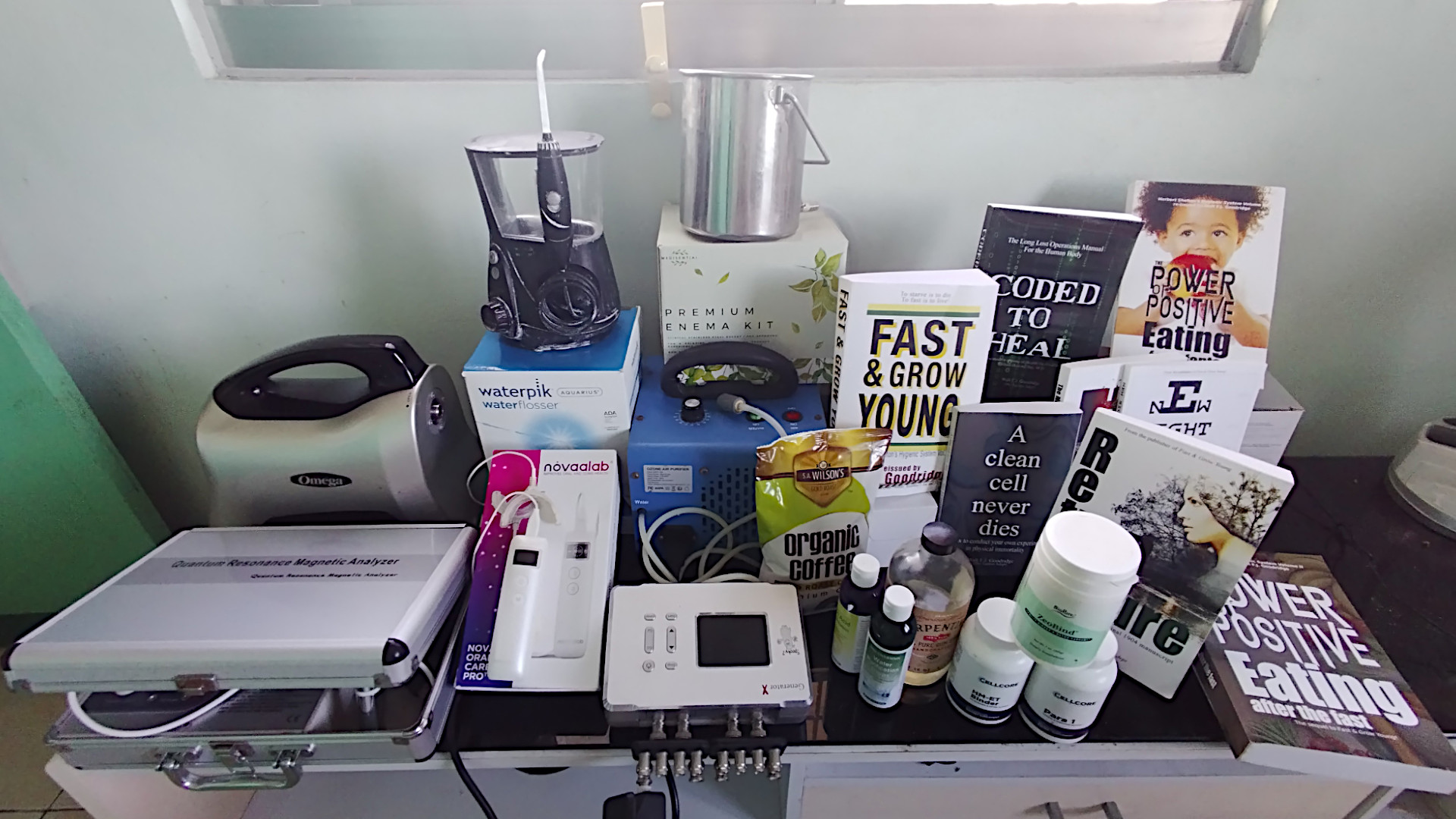
For discount coupon codes and direct links for some of unique health products I use, check out The Coupon Page —The Ageless Adept
***
-

A Clean Cell Never Dies
Price range: $4.95 through $9.95 Select options This product has multiple variants. The options may be chosen on the product page -

The Power of Positive Eating…After the Fast
Price range: $6.99 through $18.95 Select options This product has multiple variants. The options may be chosen on the product page -

The S.W.E.A.T Manifesto (FREE!)
Price range: $0.00 through $5.95 Select options This product has multiple variants. The options may be chosen on the product page

 perate based on a combination of human programming and the ability to learn from vast amounts of text data. Here’s a breakdown of how this works in relation to your question: